


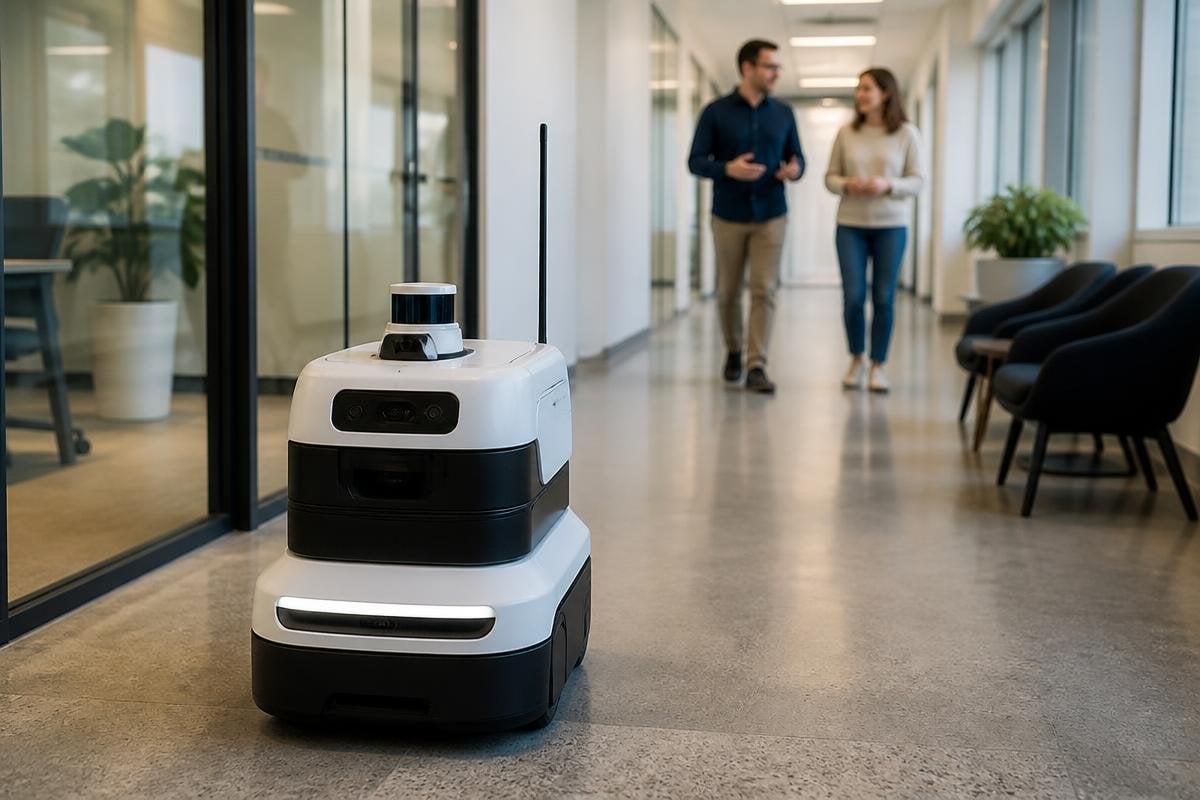
A robot can watch a room, hear speech, map a building, and send data to another computer while it moves. That makes privacy questions part of the robot’s design, not paperwork added after deployment.
- Cameras and microphones can collect data from people who never agreed to it
- Maps may reveal private rooms, work areas, or daily routines
- Retention, access, and deletion rules can matter as much as the sensors
The robot collects more than its operator sees
A mobile robot may need cameras to avoid people and LiDAR to measure distance. A service robot may also need microphones, location data, or an account linked to a person. Each sensor creates a record that can say something about someone nearby.
The difficult part is that the person in front of the robot may not be its customer.
Delivery robots can record a passer-by. Security robots can scan a visitor. Warehouse robots can collect footage of workers who never chose the system.
That creates a gap between the robot’s task and the data it gathers. Avoiding a chair may need a depth reading, but it may not need a stored video clip. A voice command may need short-term audio processing, while a permanent recording creates a different legal problem.
Purpose matters after the first task
A company may install a robot to move stock, inspect equipment, or clean floors. Later, the same data could be used to check worker activity, study customer behavior, or train a recognition system.
The new use changes the privacy question. Data collected for navigation may reveal where people stand, when they arrive, and how long they stay. A map built for safe movement can also expose the layout of a private home or a restricted work area.
The system should therefore tie each data type to a stated task. If the robot can complete that task without storing faces, voices, or full movement histories, the design has less data to protect and explain.
A mobile robot’s camera can record people who never agreed to be part of its task. Robot24.com’s robotics reporting can place those sensors beside the homes, shops, and public spaces where robots work. That evidence leads to the next legal problem: bystanders change who the law must protect.
Bystanders change the legal test
Consent becomes harder when people enter a robot’s working area by chance. A notice on a robot may tell a customer that recording is taking place, but it may not reach a child, a passer-by, or a worker moving through the same space.
The robot’s location matters too. A private home, hospital corridor, shop, factory, and public street create different expectations. The same camera setting can be reasonable in one place and excessive in another.
Privacy law also has to deal with identification. A raw image may be less revealing than a system that links that image to a name, account, access badge, or work record. The legal risk rises when the robot turns movement into a profile.
What remains unproven
A product sheet may list camera resolution, battery life, and obstacle detection. It may say little about who can view the data, how long records remain, or how a person can ask for deletion.
I’d treat privacy controls as part of the robot’s safety case, not as a software extra. The hard questions are practical: can the operator turn off a sensor, limit access, set a deletion period, and prove that those settings work?
The law may also struggle with decisions made from sensor data. A robot that changes access, flags a person, or assigns work can affect someone without a human seeing the full record. That raises questions about notice, review, errors, and responsibility.
A practical check before deployment
Use this checklist before a robot enters a place where people live or work:
- Name each sensor and the data it creates.
- State the task that requires each data type.
- Set a short retention period and test deletion.
- Limit access by job and record each access event.
- Give bystanders a clear notice and a way to ask questions.
- Test wrong identification, blocked sensors, and missing consent.
These checks won’t settle every legal question. They give the operator a clear record of what the robot gathers, why it gathers it, and what happens to the data afterward.
The next privacy disputes will likely start with ordinary deployment details: one camera left on, one map kept too long, or one automated decision that nobody can explain. A robot that collects less data is easier to run, easier to audit, and easier to defend when the law catches up.
